
Inflammation is a killer - but meditation can help fight it
Inflammation is the body’s way of defending against things that might harm it, such as infections, injuries and toxins. When something damages your cells, your body releases chemicals that trigger a response from your immune system. Messengers called inflammatory mediators tell blood vessels and cells to promote an inflammatory response. Inflammatory mediators include prostaglandins, and inflammatory cytokines.
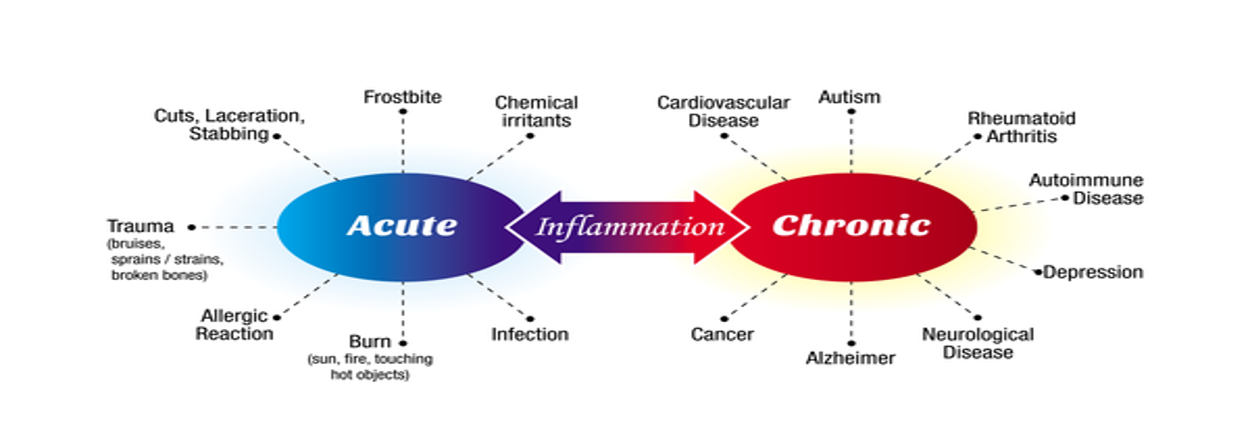
Prolonged stress and high cortisol levels, diet and other lifestyle and environmental imbalances can mean the inflammation response is constantly triggered, leading to chronic inflammation….and disease.
Chronic inflammatory diseases are the most significant cause of death in the world:
•Autoimmune diseases like rheumatoid arthritis.
•Cancer, heart disease, arthritis, type 2 diabetes, obesity, asthma
•Depression, anxiety and other mental health issues
•Neurodegenerative diseases such as Alzheimer’s disease.
Inflammation on your mental health:
•Psychological stress can activate inflammation
•Inflammation does not necessarily cause mental illness but in scientific studies, inflammation was present in a wide range of disorders. Studies found increased concentrations of a variety of inflammatory markers in depressed patients —one such biomarker of inflammation is interleukin – 6 (a pro inflammatory cytokine).
The gut brain connection
In his book, The Mind Gut Connection – Emeran Mayer explores the close connections our gut has with our moods and even our cognitive processing. Mayer provides plenty of surprising facts, such as that 95% of the body's serotonin is stored in the gut. The gut and the brain are constantly signalling to each other.
Studies have investigated mechanisms related to brain inflammation, microbiomes and stress, which all influence one another:
•Scientists transplanted gut bacteria from stressed rats into rats who were not stressed, test showed that anxiety and depression increased in the previously non-stressed rats
•Scientists also noticed that stress increased inflammation in the brains of vulnerable rats, and that this inflammation appeared in unstressed rats after they received transplants from vulnerable animals.
Mindfulness Meditation and its impact on Inflammation
Dr. David Creswell, a professor of psychology at the Carnegie Mellon University carried out a study and found that inflammation was reduced in participants after a course of mindfulness meditation.
•Researchers recruited 35 stressed-out adult job-seekers
•Half completed an intensive three-day mindfulness meditation retreat program
•Half completed a three-day relaxation retreat program that did not have a mindfulness component.
•Brain scans and blood tests were taken before and after the study
•Blood samples showed that participants who underwent the mindfulness training had lower levels of Interleukin-6, a biomarker of inflammation, than those who did relaxation alone.
•Brain scans revealed that meditation increased functional connectivity between two brain areas that typically work in opposition: the default mode network (which is involved in mind-wandering and internal reflection) and the executive attention network (key to attention, planning and decision-making). Relaxation training did not have this effect.
"Mindfulness meditation teaches participants how to be more open and attentive to their experiences, even difficult ones," Creswell said. "By contrast, relaxation approaches are good in the moment for making the body feel relaxed, but ... [they're] harder to translate when you are dealing with difficult stressors in your daily life."
Creswell and his colleagues found that the daily practice of mindfulness meditation lowers inflammatory molecules by about 15% and was much more effective than a counseling based approach.
Short and long term practise
Similar studies have shown even 3 days of mindfulness training produces a short term decrease in pro-inflammatory cytokines. But long term practice has wider benefits: neuroimaging studies have shown that even at rest regular meditators have lower levels of pro-inflammatory cytokines.
After just one day of meditating a group of experienced Vipassana practitioners showed a marked ‘down-regulation’ of inflammatory genes, suggesting that beginner meditators will benefit from the kind of anti-inflammatory stress reduction that mindfulness offers. And if sustained over a lifetime, meditation might help fight or even prevent diseases linked to inflammation which include many of the world’s major physical and mental health problems.